Tattoo Styles and Techniques
A guide to popular tattoo styles and techniques, from realism, blackwork, and minimalist to watercolor, dotwork, geometric, lettering, and trash polka.
By Vegan Tattoo Studios · Updated
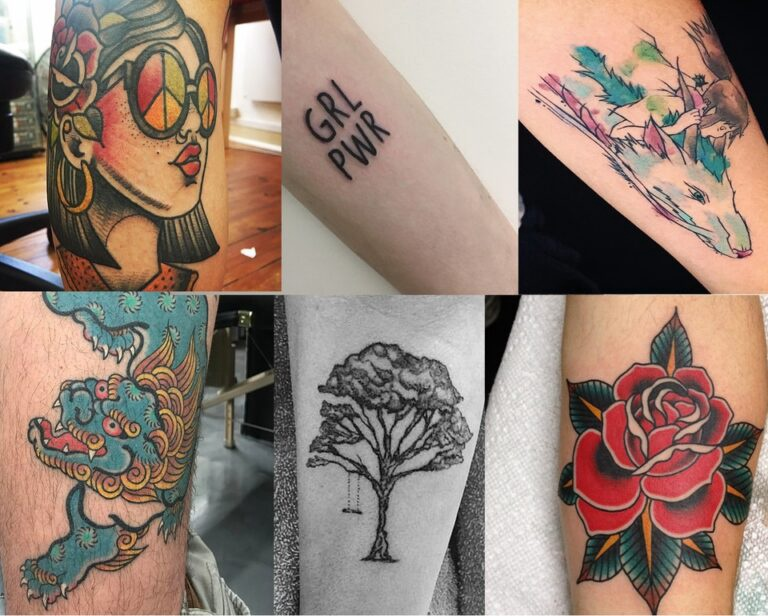
Choosing a style is as important as choosing a design — and knowing the vocabulary makes it much easier to find an artist who specializes in what you want. Here’s a guide to the styles and techniques you’ll see most often.
Minimalist
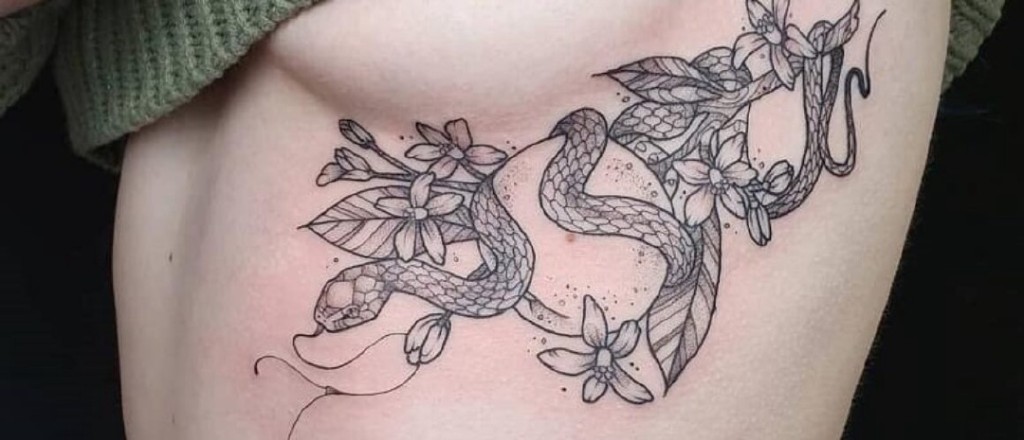
Minimalist tattooing is defined by simplicity and economy: geometric shapes, few or no colors, and small scale. Popular subjects include symbols, animals, flowers, and book illustrations.
It’s the natural choice for someone who doesn’t want a large piece but does want something personal and precisely made. Because there’s so little to hide behind, minimalist work lives or dies on the accuracy of the linework and how cleanly it heals — so choose an artist with a steady portfolio of small pieces.
Blackwork
Blackwork descends from tribal tattooing: thick, bold black lines arranged in geometric shapes. Modern artists have pushed the genre well beyond its origins, incorporating patterns and imagery from all kinds of sources into pieces that swirl around the body.
Blackwork takes dotwork and linework to their extreme — massive areas of solid black, and complex geometric, symmetrical patterns influenced by Polynesian tattooing and graphic art. The focus is on design, usually ornamental, rather than meaning or realism. From minimal to extremely intricate, blackwork stands out from across the room.
Realism
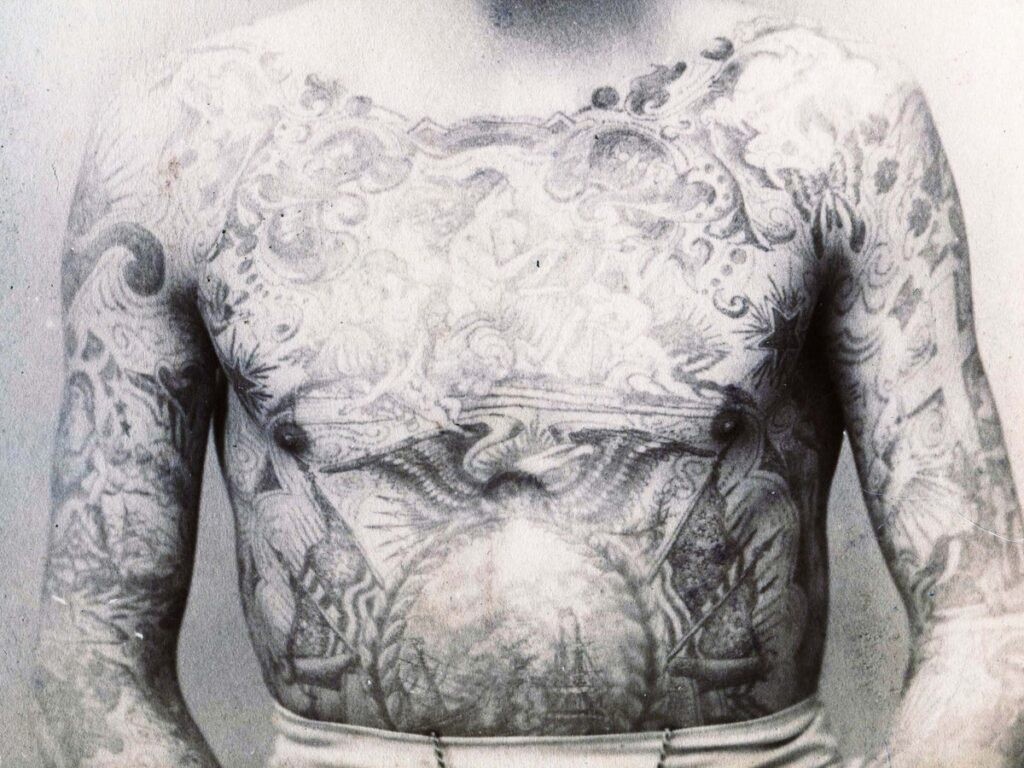
Classic realism has been part of fine art since the Renaissance, but it only reached tattooing in the latter half of the 20th century. Since then the style has become increasingly refined and enormously popular: color and black-and-grey portraits of virtually any face you can think of, along with realistic depictions of nature and the surreal.
Realism tattoos look like photographs embedded in skin. Artists who specialize in the style combine serious manual dexterity with an obsessive eye for detail, and sessions tend to run longer than other styles to fit all that detail in.
Watercolor
Watercolor is in high demand with the newest generation of tattoo collectors. It looks exactly like it sounds — as if rendered with a brush dipped in watery pastels. Looks are deceiving, though: creating that aesthetic with ink in skin is far harder than doing it on paper, and it takes a skilled artist to make it last.
Watercolor tattoos mimic streaks and splashes of paint on canvas. Often the core of the design is realistic or line-based, with the watercolor effect added in the background or around it. Themes from nature — animals and flowers especially — dominate the style.
Biomechanical
Biomechanical tattoos are typically drawn freehand to follow the unique flow of the wearer’s body, depicting machinery hidden beneath the skin. A recurring approach outlines the design so the skin appears peeled back or torn open, exposing the mechanical parts underneath. In the hands of an artist skilled at shading, the depth effect can be startlingly realistic.
Lettering
Lettering is simple on its face but can carry enormous personal meaning: names, dates, quotes, and phrases in any font imaginable, from your great-grandfather’s name to a line you want to carry for life. The typography is the design, so precision matters — look for an artist who shows clean, consistent lettering in their portfolio.
Black and grey
Black and grey work isn’t limited by subject matter — it can depict anything realistically in shades of grey, a technique originally achieved by watering down black ink into a spectrum of tones.
The “grey wash” technique combines that grayscale palette with varied needle groupings to create contrast and cast shadows, producing highly detailed work. It’s a natural fit for portraits and for realistic, surreal, and abstract themes alike.
Portraits
Portraits are a difficult proposition. Done well, they’re among the most enviable tattoos there are; rushed, and a tribute to a favorite musician or a lost family member becomes something you’ll spend years explaining.
Portraits can stand alone against a simple background or sit inside elaborate scenery, in color or black and grey, hyper-realistic or with a neo-traditional spin. Freed from the heavy outlines of classic styles, a good portrait artist can achieve eerily accurate likenesses.
Trash polka
Trash polka was created by Simone Pfaff and Volko Merschky of Germany’s Buena Vista Tattoo Club. It’s instantly recognizable for its collage-like structure, sampling from printed materials — photography, handwriting, paint splashes, typewriter text. Volko describes it as a combination of “realism and trash; the nature and the abstract; technology and humanity; past, present, and future.”
Trash polka pieces stand out for their mix of bold and fine lines and their heavy use of black and red ink, designed to look fresh — as in “just finished.” The creators maintain that true trash polka can only be executed by them, but their work serves as inspiration for anyone who wants a unique, realistic tattoo with an anarchic edge.
Surrealism and horror
The surrealist genre gives tattoo artists endless material. The style and subject can vary wildly, but the goal is constant: leave the viewer with that feeling of sublime, unsettling fantasy.
Expect symbolic scenes, dream-like scenarios, and humor that ranges from gleeful to cruel. Bizarre creatures and figures often tie a larger piece together, while single striking images are used purely to shock or catch the eye.
Geometric
As dotwork has boomed, sacred geometry tattoos have risen alongside it — the two styles usually travel together, with geometric designs executed in the dotwork technique. Sacred geometry draws on shapes and patterns found in nature: the golden-ratio spiral (you’ve seen the nautilus shell in plenty of tattoos), the flower of life, the Gordian knot. The designs are typically perfectly symmetrical and built around circles.
The broader geometric style takes inspiration from the shapes and motifs of the natural world — patterns the ancient Greeks, Hindus, Romans, and Egyptians observed, decoded, and embedded in their traditional art.
Dotwork
Dotwork is one of the most intricate styles there is: complicated geometric images built from nothing but dots, each one placed exactly where it needs to be. It’s usually done in black or grey ink, with red occasionally added for contrast.
Many dotwork artists set aside the tattoo machine entirely in favor of hand-poking, which is slower but gives finer control over each dot. The shading that emerges from massed dots has an almost three-dimensional quality you can’t get any other way. Recurring subjects include mandalas, the Hamsa hand, lace and filigree patterns, animal portraits — wolves, cats, foxes, snakes, butterflies — and human and animal skulls.
Sketch
Where most people picture tattoos as bright, bold, and crisply outlined, the sketch style deliberately refuses all of that. These tattoos imitate the rough aesthetic of an artist’s sketchbook: semi-transparent shading, partially colored areas, lines that don’t quite meet or close.
Like a skillful pencil drawing, sketch-style work trades polish for artistry and looseness. Portraits, animals, and delicate woven patterns suit the style particularly well — everything looks fresh from the drawing board, and that’s the point.
Linework
Linework is a relatively young style whose name says it all: the design is built from clean, deliberate lines, often straight, layered over or around a central drawing.
It’s beautifully simple, and a great option for someone who wants a tattoo without committing to a large piece. Black and red are the most common colors, and the technique frequently appears inside geometric tattoos. Subject matter is wide open — geometric figures, film characters, cartoons, anything that can be reduced to line.
Found a style you love? Find an artist who works in it — browse our vegan tattoo studio directory.